


GDP vs GMP: Understanding the Key Differences and Their Importance
In the pharmaceutical industry, ensuring the safety, efficacy, and quality of products is paramount.
Every pill, injection, or vaccine administered to patients has a direct impact on human health, making regulatory compliance more than just a business requirement, it is a moral and ethical obligation.
Two critical standards that safeguard these principles are Good Manufacturing Practices (GMP) and Good Distribution Practices (GDP).
While both aim to maintain product integrity, they focus on different yet complementary stages of the product lifecycle.
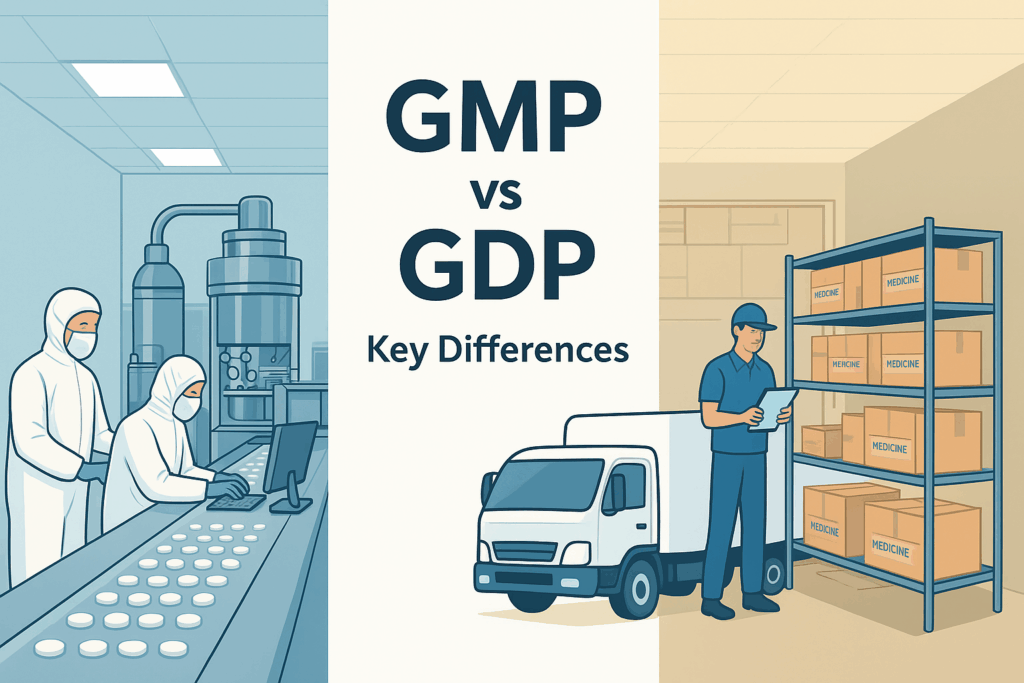
GMP governs the production of medicines, ensuring they are consistently manufactured to high-quality standards, while GDP ensures that products remain safe, effective, and intact once they leave the factory until they reach the patient.
For professionals navigating the complex landscape of pharmaceutical compliance, understanding the distinctions between GMP and GDP is essential.
This article explores these two standards in detail, highlights their differences, explains why both are indispensable, and provides practical guidance for organizations aiming to achieve and sustain compliance.
What is GMP?
Good Manufacturing Practices (GMP) are a system of regulations and guidelines that govern the manufacturing processes of pharmaceutical products.
GMP ensures that every medicine produced is of consistent quality, free from contamination, and safe for human consumption. The framework is designed to prevent errors, minimize risks, and ensure accountability across every step of manufacturing.
The primary goal of GMP is to guarantee that products are consistently produced and controlled according to quality standards.
Since patients cannot independently verify the safety of the medicines they consume, GMP provides assurance that strict processes and controls are in place.
Key aspects of GMP include:
- Personnel – Employees involved in manufacturing must have the necessary qualifications, training, and expertise. They must also follow hygiene practices, wear protective clothing, and understand their responsibilities.
- Facilities – Manufacturing facilities must be designed and maintained to prevent contamination, allow for efficient cleaning, and separate different production processes. Cleanrooms, air filtration systems, and proper waste management are crucial elements.
- Equipment – All equipment must undergo regular calibration, cleaning, and maintenance. Machines used in production must not only function correctly but also be validated to prove that they consistently deliver the intended results.
- Raw Materials – Every ingredient used in manufacturing must be tested, monitored, and sourced from approved suppliers. Quality assurance begins with raw materials because a compromised input inevitably leads to a compromised product.
- Processes and Documentation – GMP places a strong emphasis on written procedures. Every step in the production process must be documented and followed precisely to ensure reproducibility and traceability.
By adhering to GMP, pharmaceutical companies minimize risks such as cross-contamination, incorrect labeling, or dosing errors, ensuring that products are safe and effective for consumers.
What is GDP?
Good Distribution Practices (GDP) apply to the distribution phase of pharmaceutical products. After medicines leave the manufacturing facility, their quality and safety can still be compromised by poor storage, improper handling, or unsafe transportation.
GDP provides a structured framework to ensure that medicines remain effective until they reach pharmacies, hospitals, and ultimately patients.
Key components of GDP include:
- Storage – Medicines must be stored under conditions that preserve their stability. For example, temperature-sensitive vaccines require cold-chain management, while light-sensitive drugs need protective packaging.
- Transportation – Distribution partners must use vehicles and shipping containers that protect products from heat, humidity, and contamination. Real-time tracking and temperature monitoring are increasingly common requirements.
- Documentation – Detailed records must be kept for all distribution activities, including shipping logs, storage conditions, and product traceability. This ensures accountability and allows recalls to be executed efficiently if needed.
- Personnel and Training – Logistics staff must be trained to understand the importance of handling medicines correctly. For example, a simple lapse such as leaving products in direct sunlight during unloading could compromise an entire batch.
GDP ensures that the integrity and efficacy of pharmaceutical products are safeguarded during their journey through the supply chain. Without GDP, the strict controls of GMP could be rendered meaningless.
Key Differences Between GMP and GDP
Although both GMP and GDP are aimed at ensuring patient safety and product quality, their focus areas differ significantly.
- Stage of Application
- GMP applies during the manufacturing stage, ensuring medicines are produced according to high-quality standards.
- GDP applies post-manufacturing, ensuring medicines remain safe during storage, transport, and distribution.
- GMP applies during the manufacturing stage, ensuring medicines are produced according to high-quality standards.
- Personnel
- GMP requires skilled manufacturing staff trained in cleanroom operations, sterile procedures, and equipment use.
- GDP requires logistics and distribution personnel trained in proper handling, storage, and transport methods.
- GMP requires skilled manufacturing staff trained in cleanroom operations, sterile procedures, and equipment use.
- Facilities and Infrastructure
- GMP demands specialized facilities such as cleanrooms, controlled environments, and validated equipment.
- GDP relies on warehouses, distribution centers, and vehicles equipped with temperature-control systems.
- GMP demands specialized facilities such as cleanrooms, controlled environments, and validated equipment.
- Documentation
- GMP documentation includes batch records, equipment calibration logs, standard operating procedures, and test results.
- GDP documentation includes shipping logs, storage condition records, temperature monitoring data, and chain-of-custody reports.
- GMP documentation includes batch records, equipment calibration logs, standard operating procedures, and test results.
- Quality Focus
- GMP ensures quality is built into the product during production.
- GDP ensures that quality is preserved during distribution.
- GMP ensures quality is built into the product during production.
In essence, GMP creates the product under controlled conditions, and GDP safeguards it until it reaches patients. Both are vital, and one cannot replace the other.
Why Do Both GMP and GDP Matter?
The combined importance of GMP and GDP cannot be overstated. Together, they form the backbone of pharmaceutical compliance and quality assurance.
- Regulatory Compliance – Adhering to GMP and GDP regulations is mandatory for market approval. Failure to comply can lead to product recalls, license suspensions, or even legal penalties.
- Product Safety – Both standards work hand in hand to prevent contamination, degradation, or mishandling of medicines at every stage.
- Patient Trust and Brand Reputation – A single compliance failure can damage a company’s reputation and erode public trust. Compliance demonstrates a company’s commitment to patient safety.
- Risk Mitigation – Proper adherence reduces the risk of costly recalls, product shortages, and public health crises.
For example, if a batch of insulin is manufactured under perfect GMP standards but transported without refrigeration (violating GDP), it may lose its potency. The consequences could include serious health risks for patients, financial loss for the company, and penalties from regulators.
How GMP and GDP Work Together
It is a mistake to view GMP and GDP as isolated standards. They are interconnected pillars of pharmaceutical quality assurance.
- GMP ensures that medicines start their journey with the highest level of quality.
- GDP ensures that this quality is maintained until delivery.
If either standard fails, the entire system collapses. A perfectly manufactured drug can be rendered useless, or even harmful, if exposed to the wrong conditions during distribution. Conversely, perfect distribution cannot salvage a poorly manufactured product.
Pharmaceutical companies must therefore implement GMP and GDP in harmony, building a culture of quality that extends from raw materials to the patient’s hands.
Implementing GMP and GDP in Your Organization
Achieving compliance requires a structured approach. Below are strategies that organizations can adopt:
- Train Your Team – Training is the foundation of compliance. Employees must understand their roles, responsibilities, and the importance of adhering to both GMP and GDP.
- Establish Clear Procedures – Documented standard operating procedures (SOPs) ensure consistency and serve as reference points during audits.
- Conduct Regular Audits – Internal and external audits help identify gaps in compliance and provide opportunities for continuous improvement.
- Leverage Technology – Digital tools such as real-time temperature monitoring, electronic batch records, and automated alerts enhance transparency and accuracy.
- Ensure Proper Documentation – Every step must be traceable, from production to delivery. Accurate records are essential for regulatory inspections.
- Develop a Strong Quality Management System (QMS) – A QMS that integrates GMP and GDP ensures consistency across the organization and facilitates corrective actions when issues arise.
Common Mistakes to Avoid in GMP and GDP Compliance
Even well-intentioned organizations can stumble if they overlook critical areas. Some common pitfalls include:
- Inconsistent Training – Without regular training, employees may fall out of compliance or fail to recognize risks.
- Poor Documentation – Missing or incomplete records can result in regulatory action and erode trust.
- Neglecting Audits – Skipping audits leads to blind spots in compliance.
- Improper Storage and Transport – Failing to maintain correct conditions can destroy product efficacy.
- Ignoring Risk Management – Companies must continuously evaluate and address risks to stay compliant.
Avoiding these mistakes requires vigilance, commitment, and continuous improvement.
Case Study: The Importance of Compliance
Consider a scenario involving a global pharmaceutical company distributing temperature-sensitive vaccines. The company followed GMP rigorously, manufacturing vaccines of the highest quality.
However, during transportation, a container malfunction caused temperatures to rise above acceptable limits. The vaccines, though perfectly manufactured, were compromised.
This incident led to a costly recall, regulatory investigations, and reputational damage. It underscored the importance of integrating GMP and GDP, compliance in one area is insufficient without the other.
Ensure Full Compliance with Inglasia
Navigating the complex landscape of pharmaceutical regulations can feel overwhelming. Between manufacturing controls, distribution requirements, and regulatory audits, organizations face significant challenges. That’s where expert guidance becomes invaluable.
At Inglasia, we specialize in providing comprehensive support for GMP and GDP compliance. Our team of experts helps pharmaceutical and biotech companies:
- Build robust quality management systems.
- Train employees across manufacturing and distribution roles.
- Implement advanced technologies for monitoring and reporting.
- Conduct audits and prepare for regulatory inspections.
By partnering with Inglasia, companies can strengthen compliance, reduce risks, and protect both patients and their reputation.
Ready to take your compliance to the next level? Reach out to Inglasia for a consultation. Together, we can uphold the highest standards in pharmaceutical compliance.