


Temperature Mapping and GDP/GMP Compliance
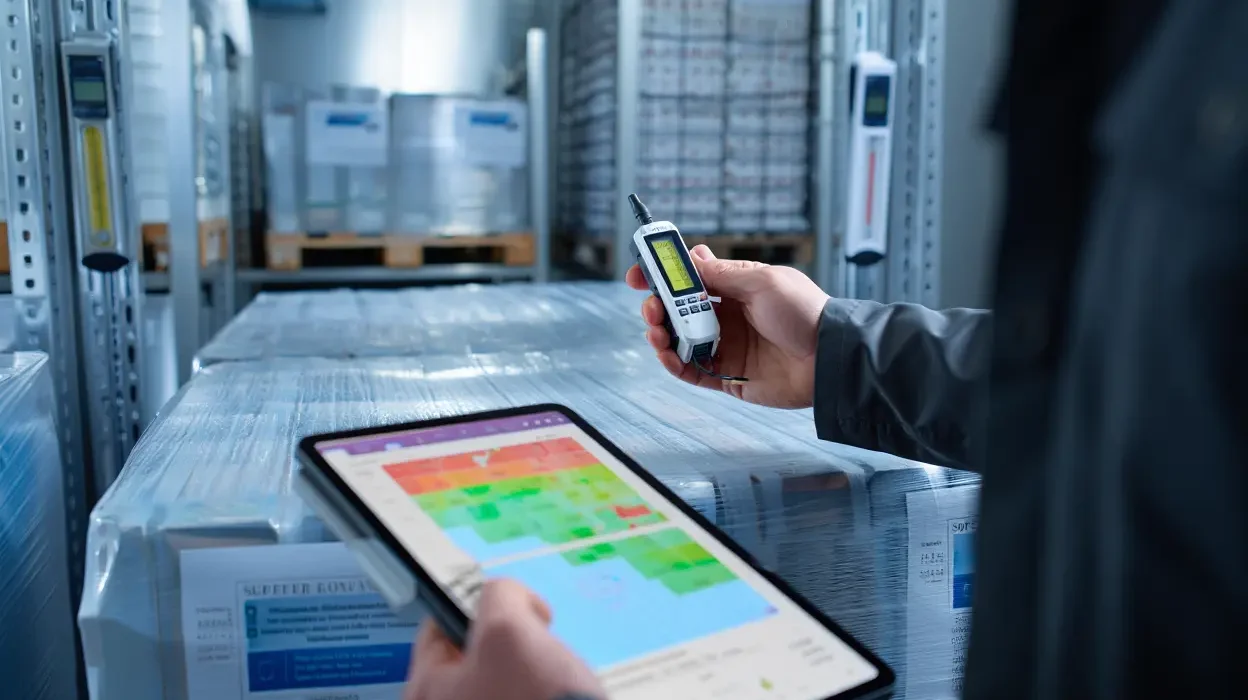
Maintaining controlled environmental conditions is a core regulatory obligation within the pharmaceutical and life sciences sector. Storage areas must consistently maintain defined temperature ranges to protect product quality, ensure patient safety, and comply with Good Distribution Practice and Good Manufacturing Practice requirements. A validated Temperature Mapping Service provides documented evidence that facilities operate within approved temperature limits and remain suitable for medicinal product storage.
Regulatory authorities expect organisations to demonstrate structured validation of temperature controlled areas. Environmental monitoring alone is not sufficient. Companies must show that storage spaces have been qualified, that temperature distribution is uniform, and that potential risk areas have been identified and mitigated. Without formal temperature mapping, organisations expose themselves to compliance findings, potential batch impact assessments, and reputational damage.
This article explains how temperature mapping supports GDP and GMP compliance, outlines regulatory expectations, and clarifies why structured validation is essential for inspection readiness.
Understanding Temperature Mapping in Regulated Environments
Temperature mapping is a validation exercise designed to evaluate temperature distribution within a defined space over a specified period. The objective is to confirm that the environment can consistently maintain the required storage conditions under both normal and worst case operational scenarios.
A structured mapping study typically involves:
- Development of a written validation protocol
- Risk assessment of facility layout
- Placement of calibrated data loggers in predetermined positions
- Continuous temperature recording over a defined time frame
- Analysis of minimum and maximum temperature values
- Identification of hot spots and cold spots
- Comparison of results against acceptance criteria
- Issuance of a formal validation report
The process may be performed in empty facilities, under simulated load conditions, or during full operational activity depending on regulatory expectations.
Temperature mapping is commonly required in pharmaceutical warehouses, ambient storage rooms, refrigerated areas, freezer units, stability chambers, and temperature controlled transport vehicles.
Why GDP and GMP Require Temperature Validation
Good Distribution Practice requires that medicinal products are transported and stored under conditions that preserve their quality and integrity. Similarly, Good Manufacturing Practice mandates that facilities and equipment are suitable for their intended use and are properly qualified.
From a regulatory perspective, temperature mapping demonstrates that:
- The storage environment is capable of maintaining specified temperature ranges
- Monitoring systems accurately reflect environmental performance
- Alarm limits are appropriately configured
- Product stability is not compromised by environmental variability
Without mapping studies, organisations cannot confidently demonstrate that storage areas perform consistently across all locations within the facility.
Inspectors frequently request temperature mapping documentation during audits. A lack of structured validation can lead to regulatory observations and corrective actions. In more serious cases, companies may be required to perform retrospective product impact assessments, which can be costly and disruptive.
Temperature mapping therefore acts as both a compliance safeguard and a quality assurance mechanism.
Regulatory Expectations Under EU GDP
EU GDP guidelines require wholesalers and distributors to ensure that storage conditions are controlled, monitored, and documented. Facilities must be capable of maintaining the conditions specified for medicinal products at all times.
GDP expectations include:
- Qualification of storage areas
- Regular review of environmental data
- Investigation of temperature excursions
- Implementation of corrective and preventive actions
- Retention of validation records
A mapping study supports these requirements by validating the suitability of storage areas prior to ongoing monitoring.
Mapping also provides evidence that sensor placement for continuous monitoring systems is based on risk assessment and data driven analysis rather than assumption.
GMP Annex 15 and Qualification Requirements
EU GMP Annex 15 outlines requirements for qualification and validation activities. Storage areas, warehouses, and temperature controlled environments must be qualified to confirm they are fit for purpose.
Qualification activities typically include:
- Installation Qualification where applicable
- Operational Qualification through temperature mapping
- Performance Qualification under routine conditions
- Periodic requalification
Temperature mapping plays a central role in Operational Qualification by demonstrating environmental performance across the entire storage space.
Regulators expect organisations to reassess storage areas when significant changes occur, including facility expansion, HVAC modification, layout reconfiguration, or changes in product profile.
Seasonal Mapping and Environmental Risk Management
Environmental conditions fluctuate throughout the year. Temperature control systems may be challenged during periods of extreme heat or cold. Regulators expect facilities to account for seasonal variation when validating storage environments.
Seasonal mapping studies assess:
- HVAC performance during peak summer temperatures
- Cold weather impact on facility insulation
- Recovery times following door openings
- Stability of internal air circulation
By conducting mapping during representative seasonal extremes, organisations can demonstrate that storage conditions remain compliant throughout the year.
Seasonal validation reduces the risk of unexpected temperature excursions and strengthens inspection readiness.
Common Compliance Failures in Temperature Controlled Facilities
Organisations that neglect structured mapping often encounter preventable compliance issues. Common failures include:
- Insufficient number of data loggers during validation
- Inadequate distribution of sensors across racking levels
- Failure to perform mapping following facility modifications
- Lack of documented validation protocols
- Absence of periodic requalification
- Incomplete analysis of collected data
These weaknesses can lead to inaccurate conclusions regarding facility performance.
Temperature mapping identifies potential variability within storage spaces and allows organisations to implement corrective measures before compliance is compromised.
Temperature Mapping Across Different Storage Conditions
Ambient Storage
Ambient storage areas typically operate between 15 and 25 degrees Celsius. Mapping confirms that temperatures remain within acceptable limits across all shelving heights, wall perimeters, and loading zones.
Uniformity is particularly important in large warehouses where airflow distribution may vary significantly.
Refrigerated Storage
Refrigerated rooms, typically maintained between 2 and 8 degrees Celsius, require tighter environmental control. Mapping assesses air circulation efficiency, compressor performance, and recovery times after door openings.
Data analysis must confirm that temperature excursions remain within defined tolerances.
Frozen Storage
Frozen environments present unique challenges. Data loggers must be capable of accurately capturing low temperature conditions. Mapping studies evaluate stability, defrost cycle impact, and equipment redundancy.
Each temperature category requires a risk based validation approach aligned with product sensitivity.
Documentation and Audit Readiness
A Temperature Mapping Service must produce clear, structured, and inspection ready documentation.
Regulatory inspectors expect to review:
- Approved validation protocol
- Calibration certificates for all data loggers
- Raw temperature data records
- Statistical analysis and summary tables
- Identification of deviations
- Corrective actions implemented
- Final validation report signed and approved
Documentation should integrate with the Quality Management System and remain accessible for inspection at all times.
Proper documentation demonstrates regulatory maturity and reduces audit risk.
The Importance of Engaging Regulatory Specialists
Temperature mapping is not merely a technical measurement exercise. It is a regulated validation activity that must align with GDP and GMP expectations.
A professional provider ensures:
- Risk based protocol development
- Strategic logger placement
- Accurate interpretation of results
- Clear and defensible reporting
- Alignment with inspection standards
Organisations seeking structured validation support can rely on our Temperature Mapping Service to ensure facilities meet GDP and GMP requirements with documented compliance assurance.
Professional oversight strengthens confidence in environmental control systems and enhances audit readiness.
Strengthening Compliance Through Proactive Validation
Proactive temperature validation supports:
- Product quality protection
- Reduced regulatory exposure
- Enhanced supply chain reliability
- Improved inspection outcomes
Mapping should be integrated with environmental monitoring, deviation management, and change control procedures.
A continuous validation strategy ensures that facilities remain compliant as operations evolve.
Conclusion
Temperature mapping is a fundamental compliance requirement within pharmaceutical storage and distribution environments. It provides documented evidence that facilities maintain required environmental conditions and operate within regulatory expectations.
A structured Temperature Mapping Service strengthens GDP and GMP compliance, enhances inspection readiness, and protects product integrity across the supply chain.
To discuss how your organisation can strengthen environmental compliance and ensure inspection readiness, Contact Us to speak with our regulatory specialists.