


Quality Management System for Pharmaceutical Wholesalers: Essential Elements
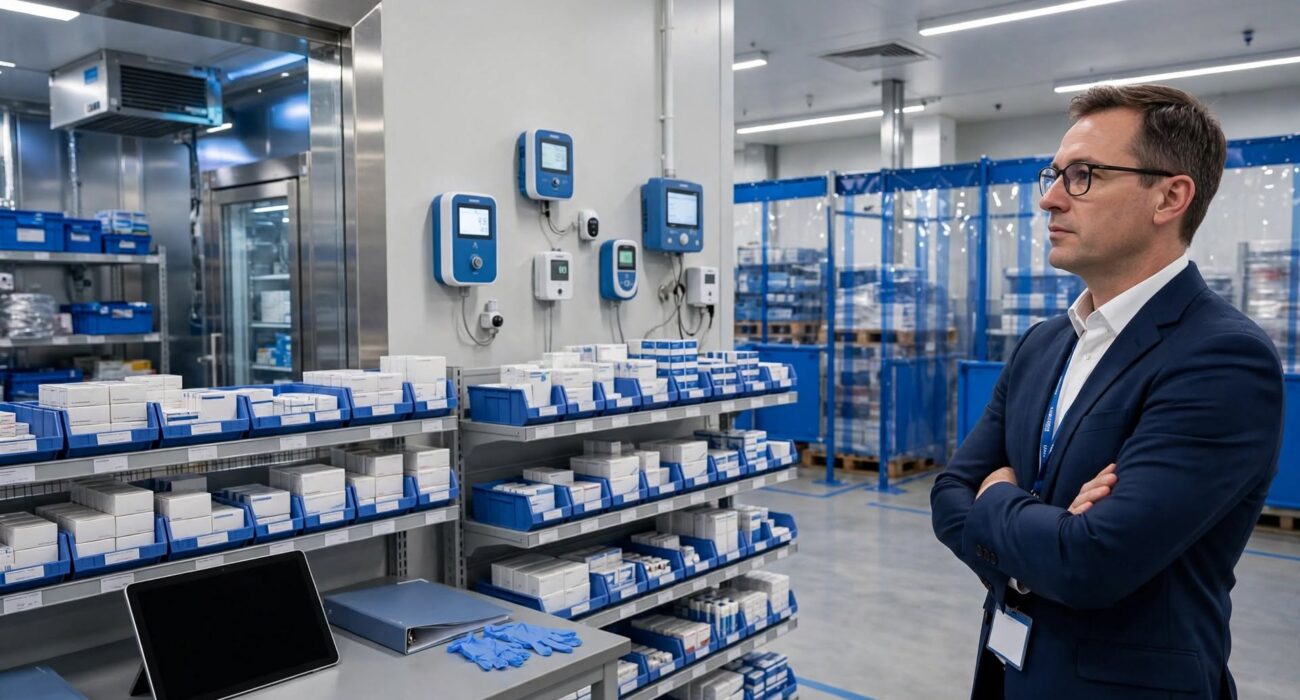
If you’re holding or applying for a Wholesale Dealer’s Authorisation (WDA licence), your GDP Quality Management System isn’t a folder of SOPs you keep for the inspector. It’s how your business actually decides what happens to a medicine when it’s under your control. That’s the first thing an MHRA inspector looks at. Not your warehouse, not your vans — your QMS. Because it tells them whether quality happens by design, or by habit. Our WDA Licence service is built around that inspection logic.
This article covers what genuinely needs to be inside a GDP QMS for a wholesale dealer, and why each element matters on a busy Tuesday, not just on paper. If you want to test whether your current system holds up under inspection, our GDP Compliance Audit Checklist takes the readiness-review angle — this article focuses on what the system itself should contain.
Why a Structured QMS Matters for GDP Wholesalers
GDP exists for a simple reason: to keep medicines intact and traceable from manufacturer to patient. As a wholesaler, you’re in the middle of that chain. Multiple suppliers, mixed stock, different customers, temperature-sensitive and high-value lines all in the same building. Without a defined QMS, quality depends on who is on shift and how they were trained two years ago. That works until you have staff turnover, a cold chain excursion, or a sudden volume spike.
A good QMS gives you:
- A consistent decision every time, regardless of who is on shift
- Evidence you can show an inspector or customer auditor without scrambling
- A way to catch and fix problems before they reach a patient
- A system that still works when you add a new site, product range, or 3PL
Organisational Structure and the Responsible Person
Every UK GDP QMS revolves around the Responsible Person (RP). It’s not just a job title — it’s a specific regulatory requirement of the WDA licence and the role the MHRA will interview first. The RP is accountable for ensuring the QMS is implemented and maintained, with duties defined in EU GDP Guidelines 2013/C 343/01 Chapter 2.2 that cannot be delegated away without proper oversight.
Define these clearly:
- Reporting lines — the RP needs real authority to quarantine, reject, and stop stock, not theoretical authority on an org chart
- Deputy arrangements — cover for RP absence needs to be documented with a named deputy available for inspection and notified to MHRA where required, not improvised on the day
- RP(Import), where it applies — if you’re importing into Great Britain from outside Great Britain, including from EU/EEA countries, you need to assess whether a Responsible Person (Import) is required
- Director-level accountability — so quality doesn’t sit in isolation while operations makes commercial decisions
For a deeper look at the day-to-day reality, see our articles on the Responsible Person and their responsibilities for Good Distribution Practice, the Responsible Person’s duties on a compliant and efficient supply chain, and Responsible Person (Import) requirements.
Documentation: The Backbone of the QMS
This is where most QMS implementations fail. Not because documents don’t exist, but because they don’t match reality. A functioning system includes:
- A quality manual setting out the QMS structure — proportionate to your size, structure and complexity
- Standard Operating Procedures (SOPs) covering all GDP activities: receipt, storage, picking, packing, dispatch, returns, and recalls
- Document control — version control, approval routes, and retiring old versions so only current SOPs are in use
- Records retention that covers batch traceability, temperature data, and training, and that stands up to ALCOA+ principles — attributable, legible, contemporaneous, original and accurate
- Change control for both documentation and operational changes, so a change to premises, suppliers or carriers is risk-assessed before it goes live
If your SOP says one thing and your warehouse team does another, an inspector will find it. That’s one of the most common findings we see during audits.
Personnel: Training and Competency
A QMS only works if the people using it are competent. GDP expects initial and ongoing role-specific training, not generic onboarding, and evidence that training actually worked.
- Role-specific induction that teaches GDP principles for that role
- Refresher training at a defined frequency
- Specific training for cold chain, controlled drugs, and high-value/high-risk products
- Training records linked to competencies — so gaps are visible before an audit
- A check on effectiveness — attendance proves participation, not competency
Our Training service covers GMP and GDP training for warehouse and distribution staff, including RP and RP(Import) preparation.
Premises, Storage and Temperature Control
Your storage environment is a core GDP requirement. The QMS needs to show how you control, monitor, and qualify it — not just describe it.
- Mapping and qualification of all storage areas, including cold storage, under normal and worst-case conditions
- Continuous monitoring with clear alert and escalation procedures for excursions
- Segregation for quarantined, rejected, returned and recalled stock, and for products requiring specific conditions
- Pest control, cleaning, and maintenance — documented and auditable
- Security appropriate to diversion risk and product value
Temperature mapping isn’t a best-practice extra — it’s a regulatory expectation. See why temperature mapping services are essential for pharmaceutical storage compliance.
Transportation and Distribution Controls
GDP responsibility doesn’t end at your warehouse door. You need to show how product integrity is maintained in transit, even when you use a carrier or freight forwarder.
- Qualification of routes and methods, especially for temperature-sensitive products
- Packaging validation for expected duration and seasonal extremes
- Written agreements with carriers and freight forwarders setting quality expectations
- Chain-of-custody so every party handling the product is traceable
- Contingency plans for delays, breakdowns, or extreme weather affecting cold chain shipments
Supplier and Customer Qualification
GDP expects you to know who you’re buying from and who you’re selling to. This isn’t a one-off check at onboarding.
- Supplier qualification — verifying manufacturing or wholesale authorisations before trading
- Ongoing supplier monitoring — not just initial approval
- Customer due diligence — confirming customers are authorised to receive medicines and watching for unusual ordering patterns that could indicate diversion risk
- Procedures to detect and report suspected falsified medicines under the Human Medicines Regulations
On FMD: the safety-feature and verification obligations of the EU Falsified Medicines Directive no longer apply anywhere in the UK. They ceased in Great Britain at the end of the Brexit transition period, and the Windsor Framework disapplied them in Northern Ireland as well from 1 January 2025. Your QMS should reference current UK anti-falsification obligations under the Human Medicines Regulations, not the EU FMD framework, across all parts of the UK.
For vendor oversight in a wider QMS, see our Good Manufacturing Practice / Good Distribution Practice Vendor Management Process Flow.
Complaints, Returns, Recalls and Deviations
Things will go wrong. How quickly you respond is a direct measure of QMS maturity.
- Complaint handling with investigation and closure timelines
- Returns procedures that clearly distinguish saleable vs non-saleable returns
- Recall procedures tested with mock recalls to prove traceability and response time
- Deviation and non-conformance management, even when there’s no formal complaint
Our overview of the medicines recall process sets out what an effective recall procedure needs to demonstrate.
Self-Inspection, CAPA and Continuous Improvement
A GDP QMS isn’t static. It needs its own check-and-improve mechanism.
- A scheduled self-inspection programme covering all GDP activities on a defined cycle
- Quality Risk Management principles per EU GDP Chapter 1.5 to set the level of control
- CAPA with root cause analysis — not just fixing the symptom, and trend analysis so repeat excursions are seen as a pattern, not isolated events
- Management review where quality metrics are reviewed by people who can allocate resource
- Trend analysis to spot recurring small issues before they become inspection findings
If you want to benchmark your programme before MHRA does, see our GDP Auditing Services.
Outsourced Activities and Quality Agreements
This is different from supplier qualification. Once you outsource storage, transport, or repackaging itself, how do you keep control of the quality outcome? GDP requires the licence holder retains ultimate control, formalised in a written quality agreement.
- The specific activities being outsourced and the standards they must meet
- Audit rights to verify ongoing compliance
- Change notification — you must be told about changes that could affect quality
- Clear allocation of responsibility for deviations, complaints, and regulatory reporting
Bringing the Elements Together
None of these elements works in isolation. A strong RP means little without trained staff following current SOPs. Robust storage means little if poor supplier due diligence lets questionable stock in. The value of a GDP QMS is how the elements interlock — documentation drives training, training supports correct storage and transport, self-inspection tests whether it’s working, and CAPA closes the loop. During our supply chain reviews, the gaps are rarely in a single element. They’re in the connections — a training record that doesn’t match the current SOP version, or a supplier approval not linked to ongoing monitoring.
Frequently Asked Questions
Do all pharmaceutical wholesalers need a formal GDP QMS, or only larger companies?
Any business holding, or applying for, a WDA licence needs a functioning GDP QMS regardless of size. The scale and complexity should be proportionate to your business, but the core elements — RP oversight, documentation, training, storage control, and self-inspection — apply whether you’re a small distributor or a large multi-site wholesaler.
Who is responsible for maintaining the GDP QMS day to day?
The Responsible Person (RP) is accountable for ensuring the QMS is implemented and maintained, but effective quality management depends on senior management providing the RP with sufficient authority and resource, and on staff at all levels following the procedures.
How often should a GDP QMS be reviewed or updated?
There’s no single fixed frequency — it depends on scale and how often things change. As a working principle, review the QMS whenever there’s a significant operational change (new premises, new product categories, new suppliers or carriers) and revisit it through management review and self-inspection findings.
What’s the difference between a GDP QMS and a GDP audit?
The QMS is the system itself — the documented structure, procedures, and controls you operate under. A GDP audit is a way of testing whether that system is actually working as designed and identifying gaps before an MHRA inspection does. Our GDP Compliance Audit Checklist explains that readiness-review process.
Does the Falsified Medicines Directive still apply to UK wholesalers?
No, not anywhere in the UK. The safety-feature and verification requirements of the EU Falsified Medicines Directive ceased to apply in Great Britain from the end of the Brexit transition period, and the Windsor Framework disapplied them in Northern Ireland as well from 1 January 2025. UK wholesalers still need procedures for detecting and reporting suspected falsified medicines under the Human Medicines Regulations.
Can a wholesaler outsource elements of its GDP QMS and still remain compliant?
Yes, but accountability cannot be outsourced. Where storage, transport, or repackaging is handled by a third party, the licence holder remains responsible for the quality outcome, which is why written quality agreements, audit rights, and ongoing monitoring are essential elements of the QMS.
What’s the biggest cause of GDP QMS failures we see in practice?
Rarely is it a single missing element. More often it’s a disconnect between elements that should be linked — a training record that doesn’t match the current SOP version, or a supplier qualification process that isn’t tied to ongoing monitoring.
If you’re setting up a WDA licence application, reviewing your GDP QMS ahead of an MHRA inspection, or want a structured second opinion on your current system, our Supply Chain and WDA Licence services are built around exactly this kind of hands-on QMS support. Contact us to talk about how we can support your GDP quality management activities.